
How to write a German CV (Lebenslauf) if you apply from abroad
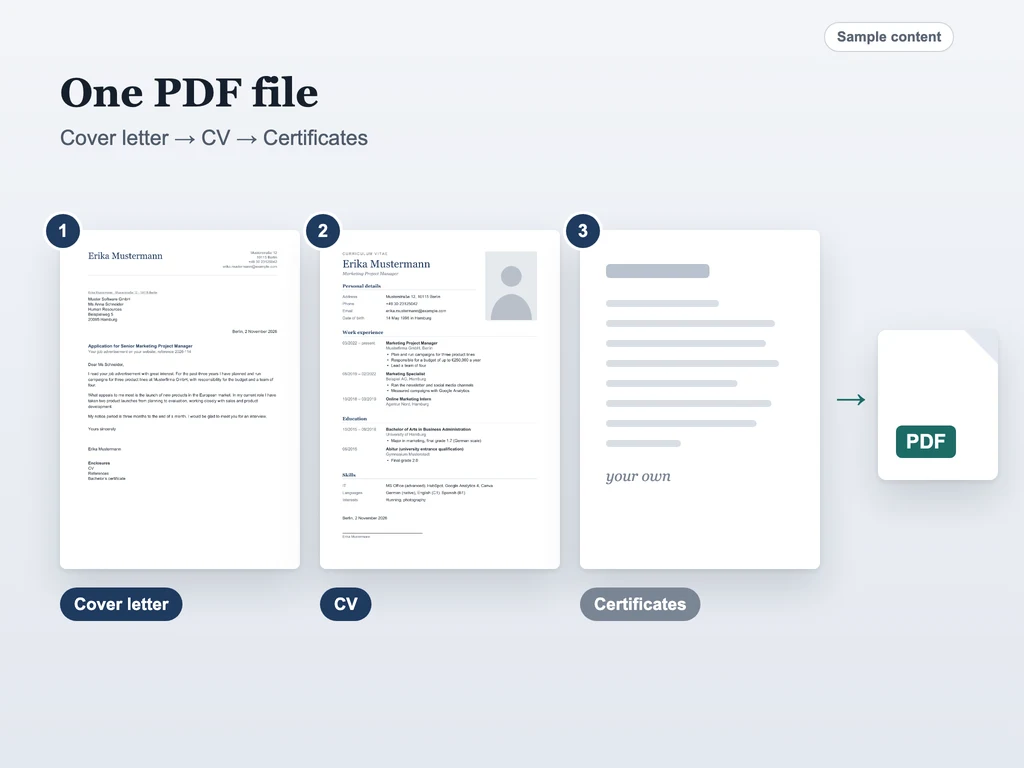
If you apply to a German employer from another country, the first surprise is how much is expected to fit into one file. A German application is usually a single PDF with a cover letter, a CV and your certificates. This guide shows what that contains, how a Lebenslauf looks, and what to check before you send it.
Methodhelm editorial teamLast updated: 2 min read
On this page
What a German application contains
Employers in Germany mostly ask for the documents by email or through an upload on their careers site. A paper folder sent by post is now rare. The usual set: - Anschreiben (cover letter), sometimes called Motivationsschreiben: why you apply and what you bring. - Lebenslauf (CV): usually a table. - Zeugnisse (certificates): references from earlier jobs and your degree or school certificates.
Put them together in one PDF, in that order, unless the advert says otherwise.
How a Lebenslauf is laid out
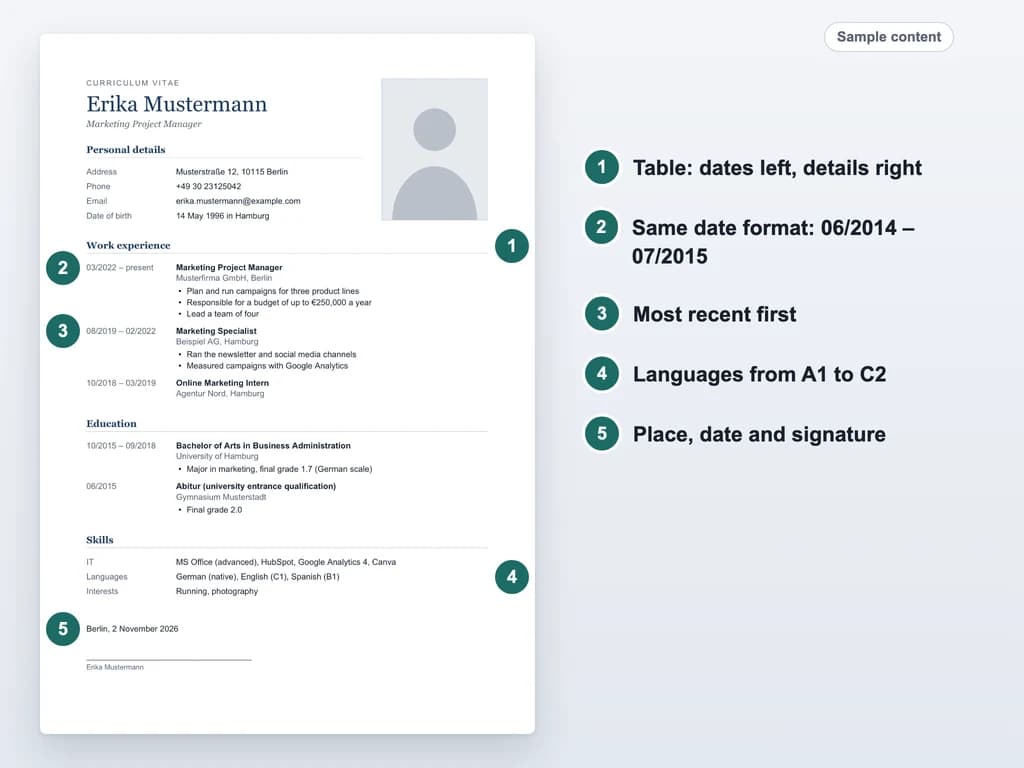
The CV is usually written as a table. The period is on the left (for example 06/2014 – 07/2015), and the content is on the right, in short bullet points. Work experience and education both start with the most recent entry. The sections are personal details, work experience, education, languages, and special skills and interests. Your languages are written with the European levels A1 to C2, for example "English: C1". At the end you put place, date and your signature. Keep it to about one A4 page, and use the same style as your cover letter. For the build step by step, see build a tabular German CV.
Six things to check before you send it
- Read the job advert again
Read the job advert again. If it asks for something specific, such as a language for the documents, follow it.
- Decide about the photo
Decide about the photo. It is common but not required, and it depends on the field. If you use one, make it a professional picture at the top right, or on the cover page.
- Check your language levels
Check your language levels. Write each one as A1 to C2.
- Explain gaps in one sentence
Explain gaps in one sentence. Everything you write must be true.
- Sign and date it
Sign and date it. The date should be the current one.
- Make one PDF and open it
Make one PDF and open it. Look through the whole file once before you send it.
Europass
The European Europass CV exists in a standard German and English layout and is a useful reference. Many employers like a layout of your own, so use Europass as a guide and adapt it.
If you want ready-made files, the German CV template kit has a Lebenslauf, Anschreiben and cover page in German and in English, in two layouts. Official information is on Make it in Germany, on the page about applications.
Frequently asked questions
How many documents do I send?
Usually a cover letter, a CV and your certificates, combined in one PDF.
Is a photo required?
No. It is common in Germany but not required, and it depends on the field.
How long should the CV be?
About one A4 page.
Is Europass the right format?
It is a good reference, but many employers like an individual layout. Adapt it rather than copying it.
Related guides
 Build a tabular German CV (Lebenslauf) step by stepA tabular German CV has the dates on the left and the details on the right, most recent first. Here is what goes in and the order to build it.
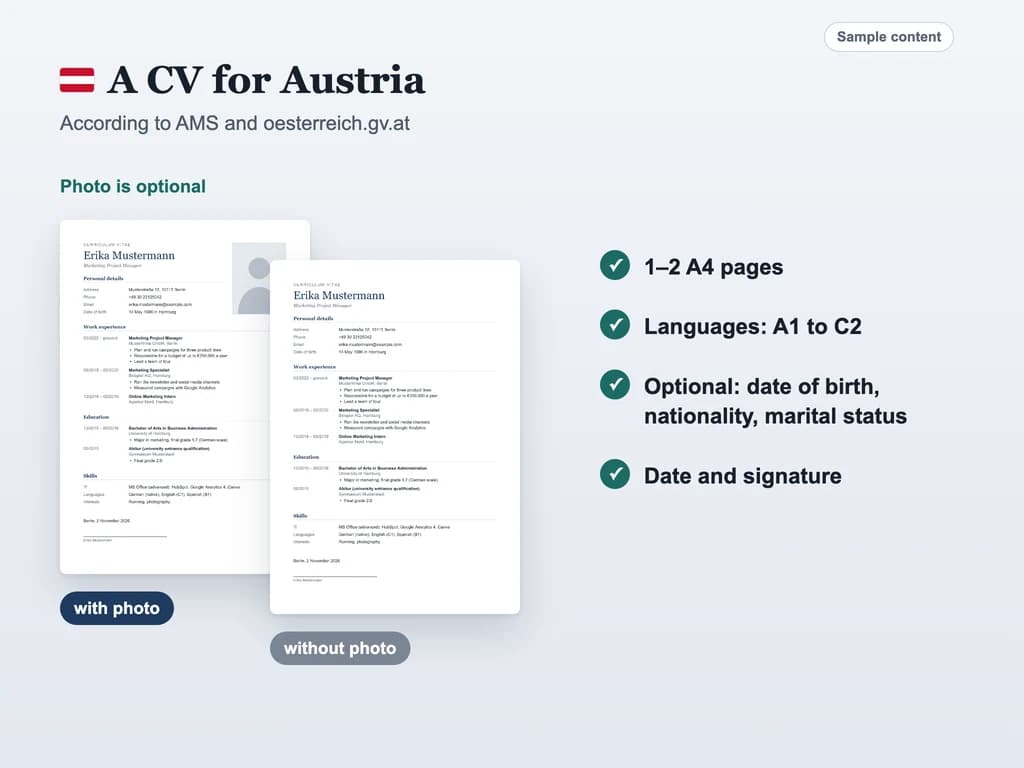 CV and application in Austria: how to use our kitIf you apply in Austria, you can use the kit's CV, cover letter and cover page. See what carries over and what to check yourself.
Get the German CV kit
A Lebenslauf, cover letter and cover page in two layouts, in German and in English, ready to edit. See what is inside before you decide.